
Bargello Quilts: Creating Smooth Fabric Flow
Straight strips, a tube of fabric and a seam ripper are all it takes to make the rolling waves of a bargello quilt, with no curved seam anywhere in the top.
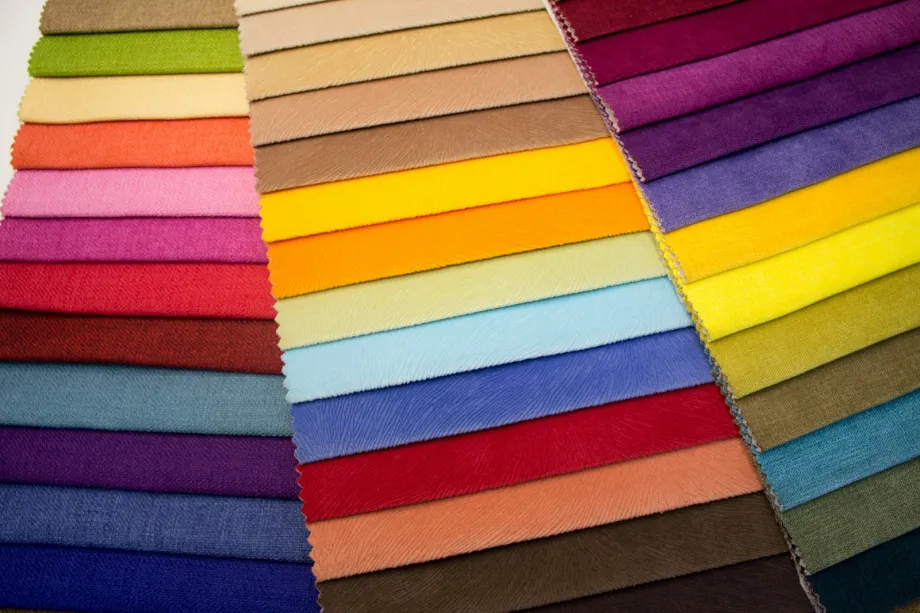
A bargello quilt looks as if it is full of curves, waves and flames, yet every seam in it is straight. The name comes from a needlepoint style, often called Florentine or flame stitch, in which long upright stitches climb and fall in zigzag peaks. Quilters borrowed the look and swapped wool for strips of cotton.
The method is the same for almost every bargello design. You sew a striped panel, join it into a tube, slice the tube into narrow rings and open each ring at a different seam. Lay the opened strips side by side and the colors step up and down across the quilt. If you can sew a steady 1/4-inch seam, you can make one. What it really asks for is careful color choice, accurate cutting and patience at the layout stage.
How straight seams make a curve
Everything starts with the strip set. Cut fabric strips across the width of the fabric and sew them together along their long edges in color order. That order becomes the gradient for the whole quilt.
When the panel is finished, fold it so the first and last strips meet, right sides together, and sew that seam too. You now have a tube, so every color has a neighbor on both sides and the sequence can start anywhere.
Segment width shapes the wave
Cut the tube crosswise into rings. The width of each ring controls the slope of the wave. Wider segments make gentle, slow rises. Narrow segments, placed one after another, make steep drops. A pattern chart tells you which width to cut for each column.
To open a ring, unpick one seam with a seam ripper. Which seam you open decides which color sits at the top of the column. Open the next ring one seam lower and the colors shift down by one strip. Lay the columns in order and the colors cascade across the quilt in a smooth line.
Grading fabric values
Value, the lightness or darkness of a fabric, matters more here than hue. A strong bargello steps clearly from light to dark and back. If two neighboring fabrics have the same visual weight, the line between them vanishes and the wave goes flat.
A palette of eight to twelve shades of one color is a gentle way to begin. Blues and teals from pale to deep naturally suggest water. For more drama, run from deep purple through cream into warm yellow; the jumps in contrast make every curve sharper.
Surface texture changes the result too. Solids give crisp graphic lines. Tone-on-tone prints add a little depth without interrupting the gradient. Batiks grade especially well because of their mottled color. Large or directional prints are best left out, since narrow segments chop their motifs into noise.
To test a lineup, fold the fabrics into narrow bands, overlap them in order in daylight and step back across the room, squinting. Any two that read as one band need replacing with a lighter or darker neighbor.
Sewing a bargello panel step by step
Bargello rewards a tidy table. Keep sticky notes or numbered pins nearby so every segment stays labeled. You will also need a rotary cutter with a fresh blade, a long ruler (6 by 24 inches is the usual size), a cutting mat, fine pins and a good seam ripper.
1. Sew the strip set
Cut the strips your chart calls for and lay them out in order. Sew them together with an accurate 1/4-inch seam. To stop the panel from bowing, change direction with each new strip: sew the first seam top to bottom, the next bottom to top, and so on.
2. Press and close the tube
Press all the seams in the panel to one side. Lower the iron, hold, lift and move on; sliding the iron along a long panel stretches it out of shape. Then bring the first and last strips together, right sides facing, and sew the closing seam.
3. Cut the segments
Flatten the tube on the mat with a seam lined up on a ruler line. Trim one edge straight, then cut the rings at the widths on your chart. Close the cutter blade every time you put it down, even for a moment while you shift the tube. Stack the rings in cutting order and number them.
4. Unpick and lay out
Open ring one at the seam above your starting color and place it on a design wall or table. Open ring two at the seam the chart gives, often one strip lower, and place it beside the first. Carry on until all the columns are up.
Keeping seams accurate and the top flat
A bargello top has a great many seam intersections, so small errors add up. A seam that is a thread too wide, repeated across dozens of strips, can leave the columns noticeably out of line.
Check your seam allowance
Before cutting into your real fabric, sew two 2-inch scrap strips together and press. The pair should measure 3 1/2 inches across. If it measures less, your seam is too wide; if more, too narrow. Adjust the needle position or your seam guide and test again.
Press for nesting
Once the columns are laid out, re-press the seams so that odd-numbered columns point one way and even-numbered columns the other. When two neighbors are sewn together, the seam allowances lie in opposite directions and butt against each other. Pin at each intersection and the color steps will line up.
Use the layout stage
Lay out every column before you sew any of them. Step back several feet and look for a color step that jumps the wrong way or a column out of order. Fixing a loose strip takes seconds; unpicking a sewn column takes much longer.
Sew the columns together in pairs, then join pairs into larger sections. Press the long column seams to one side, alternating direction from one seam to the next, and the finished top will lie flat and be ready for borders and quilting.
Frequently asked questions
Do bargello quilts need curved piecing?
No. Every seam is straight. You sew strips into a panel, join it into a tube, cut it into slices and open each slice at a different seam. The curves are an illusion created by color placement and segment width.
What fabrics work best for bargello?
Cottons that step evenly from light to dark. Solids, tone-on-tone prints and batiks all grade well. Large prints break up in narrow segments and blur the wave.
How do you press seams in a bargello quilt?
Press the seams of odd-numbered segments one way and even-numbered segments the other way. When neighboring segments are joined, their seam allowances lie in opposite directions and nest together.
Why is my bargello top wavy or bowed?
Usually because the strips stretched during sewing or pressing. Alternate the direction you sew each strip, and lift the iron instead of sliding it.