
How to Choose Fabric and Color for Your Next Quilt
Quilting cotton, a spread of light, medium and dark values and a mix of print sizes decide more about how a quilt turns out than any single favorite color.
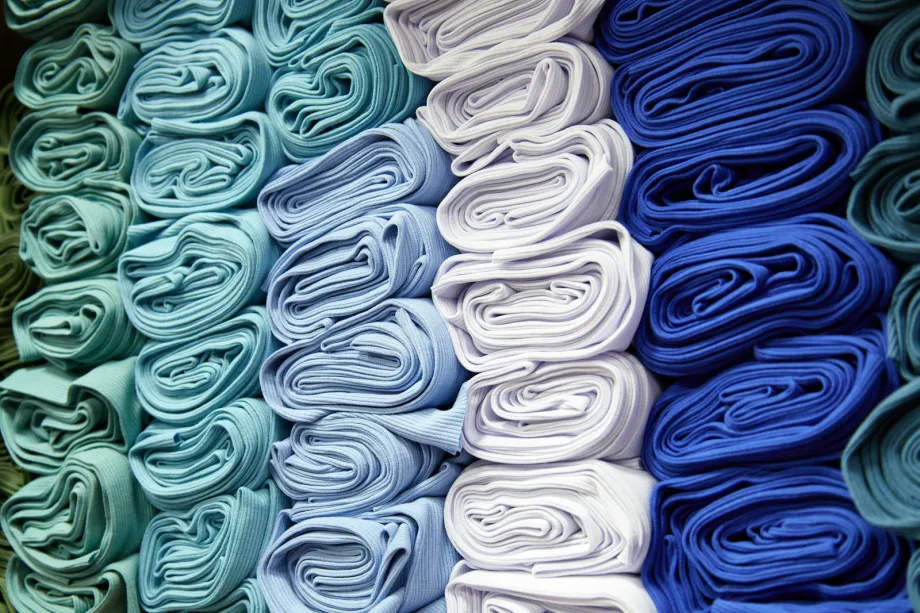
Start with the cloth itself
Standing in front of a wall of fabric bolts can make your head spin. It helps to decide on the material first and the colors second.
Why quilting cotton
Quilting cotton is a medium-weight woven fabric made entirely of cotton. Its firm weave holds its shape when cut into small squares and triangles, it takes a sharp crease under the iron and it does not melt. Polyester and blends can slip as you sew and stretch along bias edges. Linen and canvas have their place in heavier utility quilts, but for crisp seams and flat blocks, quilting cotton is the dependable choice.
Good cotton feels smooth without being slick or flimsy. Hold it up to a window: a well woven piece shows an even, close grid of threads rather than open gaps. It also takes spray starch well, which helps when you are trying to keep 1/4-inch seams accurate on small pieces.
Value matters more than color
Hue sets the mood of a quilt, but value, how light or dark each fabric is, decides whether the pattern can be seen at all. A quilt made only of medium blue, medium green and medium yellow looks muddy, because every piece carries the same weight.
Light, medium and dark
Most successful palettes include all three. Light fabrics form backgrounds and highlights. Dark fabrics draw lines and anchor the design. Mediums sit between them and add depth.
The simplest test is a phone camera. Lay your fabrics side by side in good light, take a photo and switch it to black and white. Fabrics that turn into the same gray will not separate in the finished quilt, however different their colors look in person.
Warm and cool colors
Warm colors such as red, orange and yellow seem to come forward. Cool blues, greens and purples tend to recede. A yellow star on a navy background jumps off the quilt for exactly that reason. You can use the effect on purpose, putting warm colors where you want the eye to land.
Mixing print scale
Several prints together need variety in scale. A quilt made only of big florals looks crowded, and the block shapes disappear. A quilt made only of tiny prints can look flat from across the room.
A balanced fabric pull usually includes:
- Large prints, which suit big uncut squares, borders and backings where the motif is not chopped into small pieces.
- Medium prints, the workhorses that bring color and texture to most block pieces.
- Small prints and dots, which read almost as solids from a distance and behave well in small units.
- Solids, which give the eye a resting place and let the busier fabrics show.
Directional prints and blenders
Directional prints run one way: stripes, rows of trees, lettering. Cut them with care so nothing ends up upside down or sideways in the finished blocks. Blenders are fabrics with a soft texture or mottled look in one color family. They bridge the gap between a busy focus print and plain solids, and most quilters keep plenty of them.
Building around a novelty print
Children's quilts are a good place to start from one bold fabric, such as animals, rockets or trucks. Let that print set the palette. Pull three or four colors straight from it. If a dinosaur print has teal creatures with orange spots on navy, a teal blender, an orange accent and a pale blue background fabric will all feel related.
Keep the piecing simple. Complicated blocks cut novelty prints into scraps nobody can recognize. Large squares, or fussy cut squares framed with a narrow border, keep the pictures whole and still give the quilt a clear structure.
Buying enough fabric
Pattern yardages assume a usable fabric width of roughly 40 to 42 inches. Fabric varies, so measure yours between the selvages before cutting, especially if you are working from a pattern that leaves little spare.
Buying a little more than the pattern lists is good practice for the main fabrics and the background. The extra covers:
- A miscut strip or a block that needs remaking.
- Shrinkage, if you prewash.
- Squaring up crooked cut ends from the store.
- Fussy cutting particular motifs from a directional or novelty print.
Binding is usually cut on the crosswise grain in straight strips. A quilt with curved or scalloped edges needs bias binding instead, which takes more fabric, so allow for that when you shop.
To prewash or not
Quilters split into two camps here, and both have good reasons.
The case for washing first
Some deep reds, purples and navy fabrics release dye in the first wash. Washing them before cutting lets that dye go somewhere harmless instead of into your white background. Prewashing also shrinks the cotton up front, so the pieces will not shift in size after the quilt is made.
The case for skipping it
New fabric has a finishing treatment that gives it body. That crispness makes rotary cutting and piecing easier, and skipping the wash saves time and leaves the cut edges clean and unfrayed.
If you skip prewashing, wash the finished quilt in cold water with a dye-catching sheet or two in the machine. Many quilters actually like what happens next: the cotton shrinks slightly around the quilting stitches and gives the quilt a soft, crinkled, vintage feel.
Frequently asked questions
What is the best fabric for quilting?
Woven 100 percent cotton made for quilting. It holds a crease, presses flat and stays stable when cut into small pieces. Stretchy or slippery fabrics distort easily and make accurate piecing much harder.
Should I wash quilt fabric before cutting?
It depends. Prewashing removes loose dye and shrinks the cloth before it is sewn, which matters most when deep reds or blues sit next to white. Unwashed fabric keeps its factory finish, which some quilters find easier to cut precisely.
How can I tell if my fabrics have enough contrast?
Photograph them together and convert the picture to black and white. Without hue to distract you, you can see which fabrics are light, medium or dark. Two that look identical in gray will blur together in the quilt.
Should I buy more fabric than the pattern lists?
A little extra is sensible. It covers a miscut, shrinkage from prewashing and squaring up uneven edges, and it gives room for fussy cutting a motif from a directional or novelty print.