
Essential Quilting Tools for Beginners
A rotary cutter, a self-healing mat, one long ruler, a straight-stitch machine and a decent iron will carry a new quilter through a first quilt and well beyond.
Craft store aisles are full of gadgets that promise to make quilting easier, and it is tempting to fill a basket on day one. You do not need to. A handful of good basic tools will see you through your first quilts, and spending on a few accurate pieces pays off far more than buying everything at once.
Cutting tools
Accurate sewing starts with accurate cutting. Scissors are fine for threads, appliqué and small trims, but they struggle to give a long, straight edge across a width of fabric. Three tools do that job instead.
Rotary cutter
A rotary cutter is a round blade on a handle that slices through several layers of fabric at once. The 45 mm size is the usual starting point: big enough to cut a few layers cleanly, small enough to control. Pick a handle that feels comfortable and has a blade guard you can operate easily.
One habit matters above every other. Close the blade every time you put the cutter down, even if you plan to pick it up again a second later. Cut away from your body and keep the hand on the ruler well clear of the edge. Replace the blade when it starts to skip threads; running over a pin is the quickest way to ruin one.
Self-healing mat
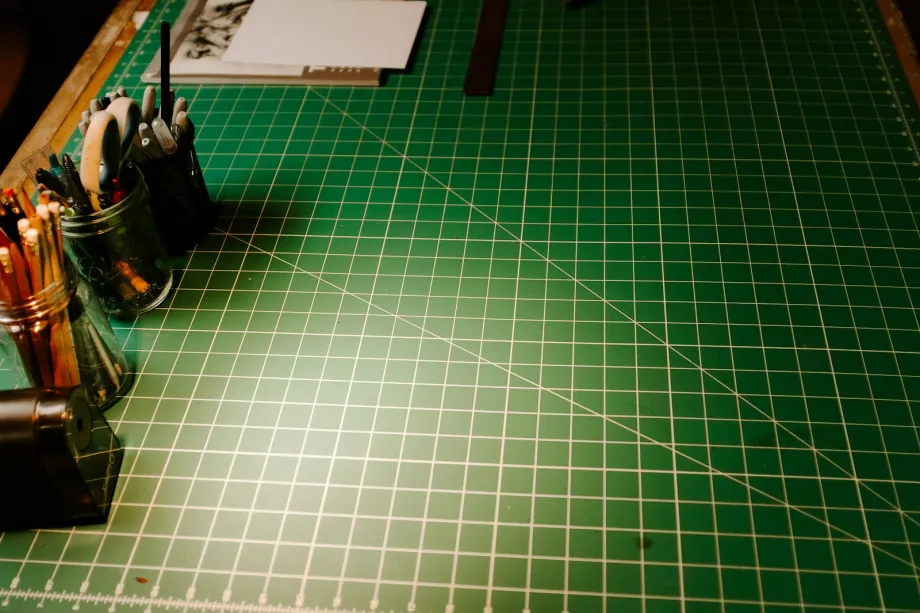
The blade needs a surface that will not dull it and will not let it slip. A self-healing mat closes up behind each cut. An 18 by 24 inch mat fits on most tables and takes fabric folded selvage to selvage. Store it flat and away from heat, which can warp it. The printed grid is useful for rough placement, but measure your cuts with the ruler, not the mat lines.
Acrylic ruler
A clear ruler lets you see the fabric underneath and gives the cutter a firm edge to run along. The 6 by 24 inch size does most of the work because it spans folded fabric in one cut. Look for fine, clear markings at 1/8-inch intervals and lines that show up on both light and dark fabric. Small non-slip dots on the underside stop the ruler from creeping as you cut.
Sewing machine and presser feet
A basic machine that sews a reliable straight stitch is enough to piece a quilt top, attach borders and sew on the binding.
What to look for in a machine
Piecing is almost all straight stitching, so decorative stitches are optional. Look for adjustable tension, easy access to the bobbin and enough power to sew through a few layers of cotton and batting without stalling. Brush lint out of the bobbin area regularly and the stitches will stay even.
Two useful feet
A 1/4-inch foot is the single most helpful accessory. It has a guide or an edge set exactly 1/4 inch from the needle, which makes consistent seams far easier. A walking foot, or even-feed foot, comes next. It moves the top layer along while the feed dogs move the bottom one, so the layers of a quilt sandwich do not shift when you quilt straight lines.
Needles and thread
Small parts make a big difference. A blunt needle or poor thread leads to skipped stitches, tension trouble and seams that break.
Thread
Fine cotton thread, commonly 50 weight, is the usual choice for piecing. It lies flat inside pressed seams and is strong enough for normal handling. Neutral colors such as off-white, light gray, tan and medium gray disappear into most prints, so you rarely need to match thread to fabric.
Machine and hand needles
Needles wear out faster than most people expect. A fresh one prevents pulled threads and uneven stitches. Universal or sharp needles in size 70/10 or 80/12 suit quilting cotton; sharps have a finer point that pierces tightly woven fabric cleanly. Change the needle at the start of each new project, or sooner if the machine starts to sound or sew differently. Keep a packet of hand needles nearby for binding and small repairs.
Pins, clips and pressing
Pins and clips
Long, thin pins with glass heads hold seams in line and will not melt if the iron touches them. Small sewing clips are a good companion. They grip thick layers and folded binding without making holes or distorting the edge. Most quilters end up using both.
Iron and pressing surface
Pressing is not the same as ironing clothes. Sliding the iron back and forth stretches pieces, especially along bias edges. Set the iron down, hold it, lift it and move on. Any steam iron with steady heat will do. A firm ironing board works, and a wool pressing mat is a popular addition because its dense surface helps seams press very flat.
What can wait
Knowing what to skip saves money. Specialty templates, electric fabric cutters, dedicated sewing tables and novelty rulers can all wait until you know which kinds of quilts you enjoy.
The same goes for metallic and heavy decorative threads, which can be fussy on a basic setup, and for free-motion and embroidery feet. Spend the first few projects getting comfortable with straight cuts, accurate 1/4-inch seams and careful pressing. Once that foundation is solid, add tools as your projects ask for them.
Frequently asked questions
Do I need a special quilting machine to start?
No. Any home machine that sews a reliable straight stitch will piece a quilt top. Decorative stitches and computerized extras are nice to have but not needed for a first quilt.
What size rotary cutter should a beginner buy?
A 45 mm cutter is the most common all-round size. It handles straight cuts through a few layers of cotton comfortably. Smaller cutters are handy for curves and small pieces later on.
Which ruler should I buy first?
A 6 by 24 inch ruler. It spans fabric folded selvage to selvage, so you can cut full-width strips in one pass. A square ruler for trimming blocks makes a good second purchase.
What thread is best for piecing?
A fine cotton thread, commonly 50 weight, in a neutral color. It sits flat in the seams and copes with a hot iron. Good polyester thread also works if you prefer it.