
Working with Batik Fabrics in Scrappy Star Quilts
Wax-resist dyeing gives batik cotton its mottled color and its dense, crisp weave, and both qualities change how you cut, sew and press it.
What makes batik different
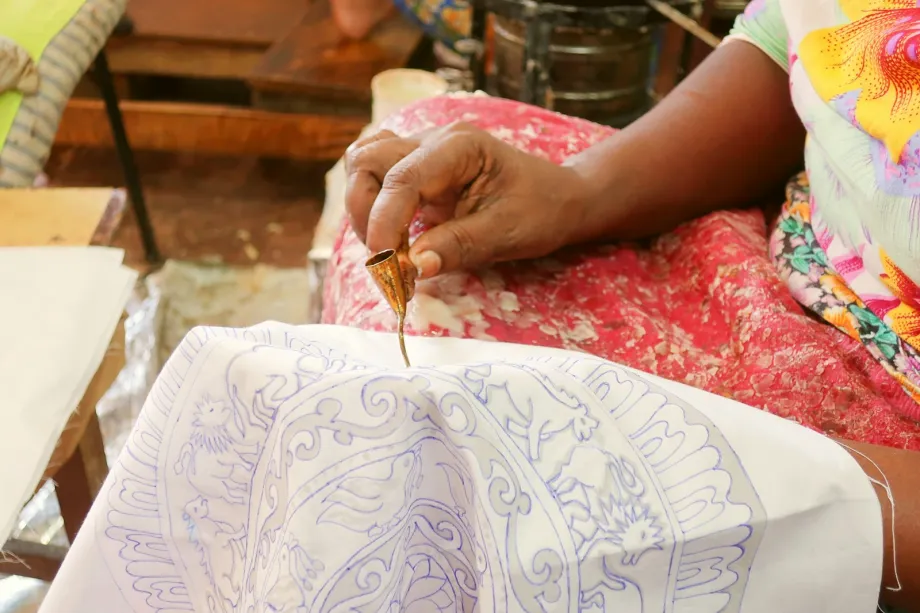
Batik is a wax-resist dyeing method with a long history in Indonesia, as well as in other parts of Asia and Africa. Hot wax is applied to cotton, either drawn by hand with a small spouted tool or printed with a metal stamp. When the cloth goes into the dye, the waxed areas resist the color. The wax is later removed, often in hot water, and the process can be repeated with new wax and new colors to build up layered designs.
Because the dye soaks through the cloth, the back of a batik is often nearly as bright as the front. That is handy when you are piecing, although it is still worth deciding on a right side and sticking to it. The cotton used for quilting batiks is usually finely woven, which gives the fabric a smooth surface and a crisp hand that feels different from many standard printed cottons.
No two lengths of batik are quite the same. Small shifts in shade and pattern are part of the process, not flaws, and they are a big part of the appeal.
Why quilters love them
Batiks have a depth that flat prints rarely match. The mottled backgrounds look almost painted, and the color shifts within a single piece give blocks movement without needing dozens of different fabrics.
The close weave also frays less at cut edges. Raw-edge appliqué makers favor batiks for that reason, and piecers notice that small pieces stay crisp under the presser foot. In blocks with many points, such as stars, that stability helps keep the angles sharp.
Sewing through a dense weave
The same density that makes batik durable can be hard on needles. A worn or blunt needle has to force its way through, which can cause skipped stitches, puckers or a loud thump with every stitch.
Needle and thread
A sharp needle in size 70/10 to 80/12 usually works well. Its slim point slips between the tightly packed threads. Universal needles have a slightly rounded point meant to cope with both woven and knit fabrics, and on very dense batiks they are more likely to push than pierce.
Pair the needle with a fine cotton thread. Thick thread adds bulk inside seam allowances and makes pressed blocks harder to flatten. Fit a fresh needle at the start of each project and change it as soon as the stitching starts to sound or look different.
Testing for loose dye
Batiks go through several dye baths, and some loose dye can remain in the fibers. Deep blues, reds and purples deserve the closest look before they go near a white background.
The test is simple. Snip a small square, drop it into a bowl of warm water with a little mild soap and leave it for a while. If the water colors, the fabric has loose dye.
Wash any fabric that bleeds before cutting it, on its own or with similar dark colors, and add a dye-catching sheet to the load. Rinse until the water runs clear.
If you are mixing batiks with regular quilting cottons in one quilt, treat them all the same way: either prewash everything or nothing. Fabrics that shrink at different rates can pucker unevenly the first time the finished quilt is washed.
A scrappy batik star quilt
Stars and batiks are a natural pair. A scrappy star quilt uses up leftover batik pieces while still looking planned, and the movement in the fabric enlivens classic blocks such as the Sawtooth Star or the Ohio Star.
Sorting scraps by value
Value decides whether a star stands out or sinks into its background. Sort your scraps into three piles: light, medium and dark. Lights go in the background squares, giving the star points a crisp edge.
Choose mediums and darks for the points and centers. Most batiks have no obvious direction, so you can turn scraps any way you like without the pattern looking wrong. Warm yellows and oranges mixed with deep blues give a classic scrappy look.
Batiks can fool the eye, because a mottled fabric may look darker up close than it does from a distance. Pin a few test blocks to the wall, step well back and look again before cutting the rest.
Piecing and pressing the stars
Sharp star points come from accurate trimming. Make half-square triangles and flying geese a little oversized, then trim them to the exact size before joining them into blocks.
Where several points meet, pressing seams open spreads the bulk and helps the block lie flat. A wooden clapper pressed onto a freshly steamed seam sets it firmly without stretching the bias edges of the triangles.
Lift and lower the iron instead of sliding it, since a sliding iron pulls star points out of shape. When the blocks are done, set them in rows with plain batik sashing or alternate squares. Rich color and sharp geometry make a quilt that stands up well to years of use.
Frequently asked questions
Why do batiks need a sharp needle?
Batik is usually printed on a closely woven cotton. A needle with a fine, sharp point pierces the threads cleanly, while a duller or worn needle can push against them and cause skipped stitches or a thumping sound.
Should batik fabrics be prewashed?
Test first. Some batiks, especially deep reds, blues and purples, release dye. Soak a small snip in warm water; if the water colors, wash that fabric before cutting, separately from light colors.
What thread works best with batiks?
A fine cotton thread, commonly 50 weight. The fabric is already dense, so a fine thread keeps seams flat and the blocks accurate.