
Best Beginner Quilt Kits with Fabric Included
A quilt kit with pre-cut fabric and a pattern removes the guesswork from your first project. You get exactly what you need in one box and can start sewing the same day.
What comes in a beginner quilt kit?
A beginner quilt kit bundles the materials for the quilt top, so you spend less time shopping and more time sewing. Every kit centers on pre-cut fabric for the front design, usually cotton squares, strips, or triangles cut to the pattern’s exact dimensions.
What else is in the box varies by brand. Most kits include a printed pattern with step-by-step instructions, and many add the binding strips that finish the edges. Some also pack the backing fabric and a piece of batting, while others leave those for you to choose separately.
- Pre-cut fabric pieces for the quilt top, sorted by color and shape
- A printed pattern with cutting diagrams and assembly steps
- Binding strips, typically 2½ inches wide, enough to go around the finished quilt
- Backing fabric, often a single wide piece or yardage you seam together
- Batting, usually cotton or an 80/20 cotton-polyester blend in a crib or throw size
- A fabric label or color guide that names each print so you can reorder if needed
How do I pick a kit I can actually finish?
Look for a kit labeled for beginners that uses large fabric pieces with straight seams. A pattern of simple squares or rectangles lets you skip matching points or sewing curves before you have the muscle memory. Check that the finished quilt is a throw or crib size, roughly 50 by 60 inches, which is large enough to feel like a real quilt but small enough to feed through a domestic machine without wrestling the bulk.
The pattern instructions matter as much as the fabric. A beginner-friendly kit includes step-by-step diagrams for every stage, not just a single assembly drawing. The cutting is already done for you, so the first thing you do is sew, not measure. Kits that use one fabric collection also remove the guesswork from color placement, since the designer has already balanced the prints.
Which fabric types hold up best for a first quilt?
Quilting cotton is the most forgiving material for a beginner. It presses flat without stretching, the weave is tight enough to hold a quarter-inch seam, and the finished top keeps its shape through basting and quilting. Midweight 100% cotton from manufacturers like Moda or Robert Kaufman is the default in starter kits because it behaves predictably at every step.
Pre-cuts from the same cotton lines, such as charm packs (5-inch squares) and jelly rolls (2½-inch strips), skip the yardage cutting stage entirely. Their edges are pinked, which reduces fraying while you handle pieces. Blended fabrics, typically a cotton-polyester mix, feel softer out of the package but shift under the presser foot and can develop a shine from a hot iron. A kit of quilting cotton or its pre-cut versions removes the two biggest early frustrations: distortion and fraying.
- Quilting cotton holds a crease and does not slip during chain piecing.
- Charm packs give you a consistent 5-inch square with no rotary cutter work.
- Jelly rolls let you sew long strips without matching grainlines from yardage.
- Batting is typically included as a low-loft cotton or 80/20 cotton-poly blend, both of which feed smoothly under a domestic machine.
- Blends with a high polyester content resist pressing and make seam intersections bulkier.
- Linen and flannel kits are available but shift easily; save them for a second project.
Are pre-cut pieces as accurate as cutting my own?
Pre-cut pieces from a reputable kit are cut with industrial rotary blades and steel dies that are more consistent than a beginner’s first attempts with scissors. The accuracy of a die-cut square or strip is typically within a millimeter of the stated size, which is tighter than the tolerance most home sewers achieve. Pinked edges, the zigzag finish you see on many pre-cuts, are not a defect. They reduce fraying during handling and do not affect the seam allowance as long as you measure from the outermost point of the peak.
Minor size variations do happen. A batch of charm squares can differ by a thread’s width because fabric layers shift slightly under the die. You handle this the same way you would with your own cutting: pick a consistent reference point, usually the straightest edge, and pin from that end. If a piece is visibly off by more than an eighth of an inch, set it aside and use it for a smaller component later.
Hand-cut kits from independent designers on Etsy or at quilt shows vary more. Before you start sewing, stack the pieces and check that they match. Trimming a few to size takes ten minutes and prevents frustration at the ironing board.
What tools do I still need besides the kit?
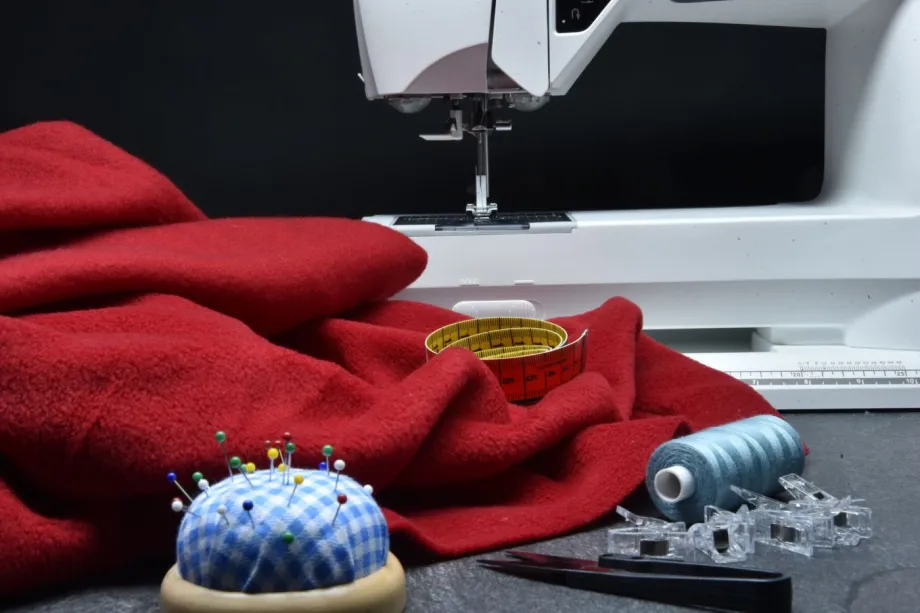
A beginner quilt kit gives you the fabric and the pattern, but it rarely includes the hardware you use to cut, press and sew. You need a few standard items that stay with you from project to project.
Most quilters already own these tools, so the extra cost is modest. A sewing machine is the biggest item. An iron and a pressing surface matter just as much, because you press every seam flat before attaching the next piece.
- A sewing machine with a straight stitch. A basic mechanical model is enough; you do not need embroidery stitches or a computer screen.
- A steam iron and a firm ironing board or a wool pressing mat. Dry heat works too, but steam helps set the seam.
- A rotary cutter with a 45 mm blade and a self-healing cutting mat, at least 18 by 24 inches. The kit pieces are pre-cut, but you will still square up edges and trim blocks as you go.
- Cotton thread in a neutral color, usually 50 wt. Match it to the lightest fabric in the kit so the stitches blend in.
- Fine glass-head pins or quilting clips. Pins hold layers without shifting them, and the flat glass heads will not melt under the iron.
How much fabric is left for mistakes?
Most beginner quilt kits include a small fabric overage, typically 5 to 10 percent beyond the stated yardage. This extra material accounts for miscuts, a seam that needs ripping out and resewing, or a piece that shifts under the ruler. The overage is not generous enough to replace an entire block, but it covers the common slips a new quilter makes.
Sew a single test block before cutting the rest of the fabric. Use the least distinctive print from the kit for that first attempt. If the block comes together correctly, you proceed with confidence. If the seam allowance wanders or a piece ends up short, you have spotted the issue early and can adjust your cutting or pressing without risking the whole project.
Check the kit instructions for a cutting diagram before you start. Some manufacturers list the exact overage included, while others simply note that scraps are minimal. Knowing which pieces have spare fabric lets you cut the others carefully first.
Frequently asked questions
Can I wash the fabric from a quilt kit right away?
Yes. Most quilting cottons in kits are not pre-washed, so you can either pre-wash everything to avoid later shrinkage or start cutting straight from the package. If you mix pre-washed and unwashed fabrics, the finished quilt may shrink unevenly, so pick one approach for the whole kit.
Do beginner kits come with backing and batting?
Some do, but many include only the quilt top fabric and binding. Check the product description for the words "backing included" or "complete kit." When backing is not included, you will need to buy 3 to 4 yards of wide quilt backing separately.
What size quilt should a beginner start with?
A throw size, roughly 50 by 60 inches, gives you enough room to practice piecing and quilting without becoming overwhelming. Crib and lap sizes also work well. Avoid a queen or king kit for your first project because the bulk is harder to handle under a standard sewing machine.
How long does it take to finish a kit quilt?
A beginner working on a throw-size kit a few evenings a week can finish the top in two to four weeks. Quilting and binding add more time depending on whether you quilt by machine or by hand. Your pace matters more than the clock, and a simple pattern with large blocks will go noticeably faster.