What is a quarter inch seam in quilting?
A quarter inch seam is the standard seam allowance in patchwork, measuring exactly 1/4 inch from the needle line to the raw edge of the fabric. In garment sewing a 5/8 inch allowance is common, but quilting uses a narrower seam to reduce bulk where many pieces join and to keep block dimensions true to the pattern.
A pieced block is a grid of small units, so the measurement matters. A shift of just 1/16 inch on every seam adds up across a row of squares and strips, and by the time you join several rows the finished block can be off by a quarter inch or more. Quilters treat the quarter inch as a fixed target, not a suggestion, and check it with a ruler before every project.
What tools give me an exact quarter inch?
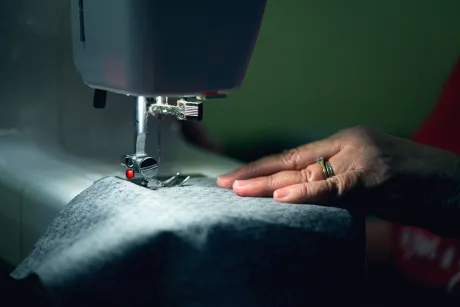
A dedicated quarter inch presser foot gives the most consistent seam. You run the fabric edge against the right side of the foot, which sits exactly a quarter inch from the needle, and sew without guessing. Many machines include one. Generic snap-on versions fit most low-shank models.
A magnetic or screw-on seam guide sits on the stitch plate and gives you the same edge to follow. It works with any presser foot you already own and costs less than a quarter inch foot. Painter's tape on the stitch plate is the simplest method and costs nothing. Lay down a strip at the measured quarter inch mark, build up a few layers, and butt the fabric against the raised ridge.
A quarter inch foot gives beginners the most consistent results because it removes the need to watch a guide line. The tape method is a close second after you test the placement. Whichever tool you use, sew a short test seam on two 2.5-inch scraps and measure the finished piece before starting a quilt block.
- A quarter inch presser foot gives a fixed edge at the correct distance.
- The foot works without marking the stitch plate or adding tape.
- A magnetic seam guide lets you keep your standard foot and adjust the position.
- Painter's tape layers up into a ridge that is easy to feel through fabric.
- Tape costs nothing and leaves no residue when you remove it.
- Test any tool with scrap fabric before sewing the actual block.
How do I set up painter's tape as a seam guide?
Painter's tape creates a raised edge on the throat plate that your fabric rides against, giving you a consistent quarter inch path. It works with any machine and costs almost nothing. The stack of tape must be thick enough that you feel the fabric bump against it, but not so tall that it catches the fabric edge as it feeds through.
Place a piece of graph paper or a ruler under the presser foot and lower the needle into it. Measure exactly a quarter inch to the right of the needle and draw a line. Lay strips of painter's tape along that line, stacking three or four layers directly on top of each other. Keep the front edge of the stack parallel to the feed dogs so the fabric butts against a straight wall. Run a test scrap through and check the resulting allowance with a ruler before sewing any project pieces.
How do I test my seam allowance before a project?
Cut three strips of fabric, each exactly 1.5 inches wide. Sew the first two strips together along the long edge with your usual quarter inch setting, then attach the third strip to the other side of the second strip. Press the seams toward the darker fabric.
Measure the middle strip. It should be exactly 1 inch wide from seam line to seam line. If it is narrower, your seam allowance is too wide. If it is wider, the allowance is too narrow. A difference of even 1/16 of an inch adds up fast across a block with many pieces.
Aim for the 1-inch measurement on the middle strip before you start cutting for a project. Adjust your needle position or guide and test again until the result is consistent.
Why does my block come out too small even with a quarter inch foot?
A quarter inch presser foot measures the distance from the needle to the edge of the foot. It does not account for the fold of fabric the thread takes up when you press the seam open. That fold, roughly the thickness of a thread or two, eats into the fabric on both sides of the seam line. Over a block with several seams, those tiny losses add up and the finished piece measures short.
The fix is a scant quarter inch. Sew so your seam is a needle's width or two narrower than a full quarter inch. The fold then fills that gap, and the pressed unit matches the intended size.
If your machine lets you move the needle position, shift it one click to the right while keeping the fabric edge against the foot. That gives you the scant allowance without having to guess the line. On a machine without needle adjustment, move your guide, a piece of tape or a stack of sticky notes, just a hair to the right of the foot's edge and test again.
How do I press the seam after sewing?
Press every seam before you cross it with another line of stitching. Place the sewn piece flat on the ironing board and lower a dry, hot iron onto the stitches for three to five seconds. This sets the thread into the fabric and shrinks up any tiny puckers without flattening the loft of your batting or the weave of the cotton.
Flip the unit over and press from the wrong side to direct the seam allowance toward the darker fabric. Lift and lower the iron instead of sliding it, which can stretch a bias edge out of shape. After the seam has cooled, turn the block face up and press lightly from the front. Steam can be helpful on straight-grain pieces, but skip it when you are working with bias edges or triangles because the moisture makes the fabric relax and the block can lose its exact size.
Frequently asked questions
Can I use the edge of my regular presser foot?
The edge of a standard presser foot is typically wider than a quarter inch, so lining up fabric with it will give you a seam that is too wide. Measure from your needle to the right edge of the foot. If it is not exactly a quarter inch, use tape or a seam guide instead.
What is a scant quarter inch?
A scant quarter inch is a seam sewn one or two threads narrower than a full quarter inch. This tiny difference compensates for the fabric fold and the space the thread takes up when you press the seam open or to one side. Most patterns assume a scant quarter inch, especially when many seams meet in one block.
Do I need a special needle or thread for the seam allowance?
No special needle or thread is required just for the seam allowance itself. A universal size 80/12 needle and 50-weight cotton thread work well for most quilting cotton. The key is not the supplies but the consistent guide you use on the machine bed.
How often should I check my seam allowance?
Check it at the start of every new project and any time you change your thread, needle, or fabric weight. Even a small bump of the seam guide or a switch from light cotton to heavier flannel can shift your line enough to throw off block sizes.